Male Dimple Surgery: Yes, Men Get Dimples Too!
July 3, 2026
Open vs Closed Rhinoplasty: What Is the Difference?
September 21, 2026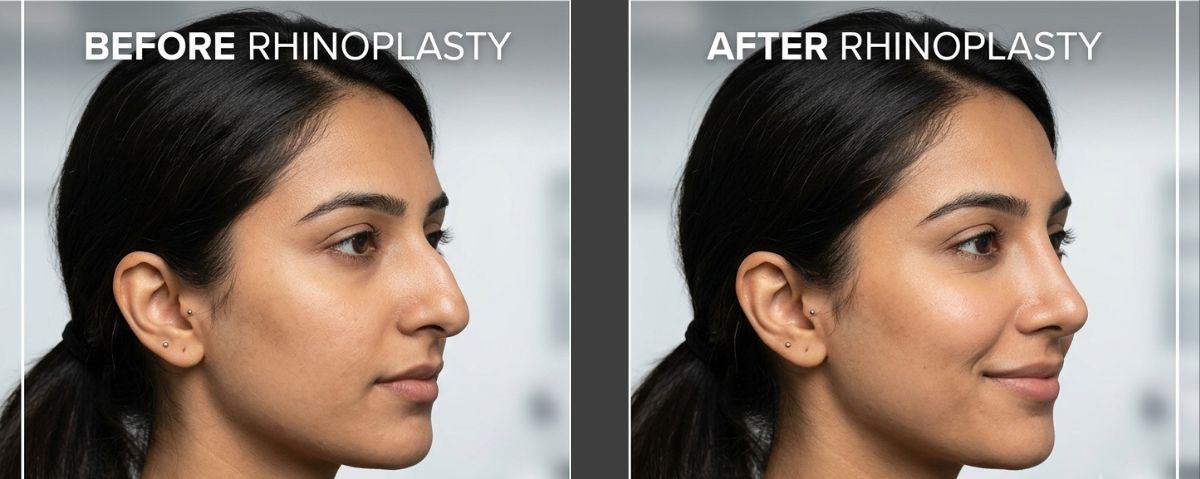
By Dr. Hirra Alavi
I see the same questions in my consultation room in DHA Lahore, whether the patient is a 22-year-old university student or a mother in her forties. Rhinoplasty is one of the most requested procedures at my practice and also one of the most misunderstood. It’s a small change in the middle of your face, but it affects breathing, symmetry, and how you see yourself in every photo for the rest of your life.
Here are the seven things I wish every patient in Pakistan knew before booking a rhinoplasty in Lahore. Some of this will save you money. Some will save you a second surgery.
1. Rhinoplasty Can Fix More Than Looks, But Know What It Actually Treats
Most people come in wanting a smaller tip or a smoother bridge. Fair enough. But nose reshaping surgery also corrects functional problems: a deviated septum, chronic breathing difficulty, or damage left over from an old injury. If you’ve struggled to breathe through one nostril for years, mention it; a well-planned procedure can address the dorsal hump you don’t like and the airway problem you’ve learned to live with in the same operation.
What rhinoplasty won’t do is turn your nose into someone else’s. Generally speaking, ethnic rhinoplasty for South Asian patients works best alongside skin thickness, bone structure, and facial proportions, not against them. The goal is a nose that looks like it belongs on your face, not one copied from a magazine.
2. Open vs. Closed Rhinoplasty Isn’t Your Decision Alone
Patients often walk in with a preference already fixed in their head, usually closed, because “no scars” sounds appealing. But the right approach depends on your anatomy, not a trend that you just came across online.
Closed rhinoplasty keeps every incision inside the nostril and suits minor, more contained adjustments. Open rhinoplasty uses a small incision across the columella, giving me direct visibility for complex tip work, revision cases, or significant structural correction. Neither is superior across the board. The surgery method should follow what your nose actually needs. I’ll walk you through which one applies to you after examining your nasal structure, not before.
 3. Recovery Takes Longer Than the Bruises Suggest
 3. Recovery Takes Longer Than the Bruises Suggest
Most of the visible bruising around your eyes fades in one to two weeks, which is usually when patients feel ready to return to work or university. But the swelling underneath the skin lingers far longer. Cartilage and soft tissue continue settling for 12 to 18 months before your nose reaches its final shape.
This matters because early impatience causes unnecessary anxiety. If your nose still looks slightly fuller three months in, that’s normal healing, not a failed surgery. I ask patients to trust the timeline and keep up with follow-up visits rather than judging results too soon.
4. “Non-Surgical Rhinoplasty” Is Not the Same Procedure
There’s a lot of confusion around rhinoplasty without surgery, with filler injections marketed as a quick fix. These can temporarily smooth a small bump or camouflage minor asymmetry, but they add volume; they don’t remove it, reshape a bulbous tip, or fix breathing problems. The results last months, not years, and using filler on a nose with poor blood supply carries real risk if it’s not done by someone trained to assess that.
If you have a dorsal hump, a droopy or boxy tip, or any structural concern, surgical correction is the only route to a lasting result. I’m upfront with patients who ask about the non-surgical route; sometimes it’s a reasonable temporary option, and sometimes it’s the wrong tool for the job entirely.
5. Yes, It’s Safe When Done by the Right Hands
Patients ask me constantly: Is nose plastic surgery painful? Is it safe? Is it permanent? Here’s the honest answer. Discomfort in the first few days is manageable with medication and is nowhere near what people imagine from social media horror stories. The results are permanent once healing completes, barring trauma or major weight changes affecting the skin.
Safety comes down to who’s holding the instruments. Complications like infection, cartilage deviation, or unsatisfactory results are rare in experienced hands but become more likely with under-qualified practitioners chasing volume over precision. Rhinoplasty is technically one of the more demanding procedures in facial plastic surgery. Ask about your surgeon’s specific training in it, not just their general surgical background.
6. Not Every “Surgeon” Offering Rhinoplasty in Pakistan Is Actually Trained For It
This is the one I’d underline if I could. Pakistan has seen a rise in clinics advertising cosmetic procedures performed by dentists, general physicians, or technicians with weekend certifications. A nose job involves bone, cartilage, and airway structures that require years of dedicated surgical training to handle safely.
Before booking with anyone claiming to be among the top rhinoplasty surgeons in Pakistan, verify their FCPS credentials, ask how many rhinoplasty cases they’ve personally performed, and ask to see real patient results, not stock photography. I trained through the five-year integrated residency in plastic surgery at Mayo Hospital, and I still treat every rhinoplasty consultation as its own puzzle to work through carefully.
7. Cost in Lahore Reflects the surgeon, the technique, and the facility, not just the city.
Rhinoplasty cost in Lahore and generally across Pakistan varies widely. Price alone tells you very little about quality. What actually affects the number is the complexity of your case (primary versus revision). Is the surgery combined with septal repair for breathing? Or what are the surgical facility and anesthesia standards and the surgeon’s experience level?
I’d rather have a patient pay for a properly planned procedure once than chase a cheaper quote and end up needing revision surgery later, which costs more in money, time, and healing. During your consultation with me, ask for a clear breakdown of what’s included so there are no surprises afterward.
Book Your Consultation
If you’re considering rhinoplasty surgery DHA Lahore, the right first step isn’t a price quote; it’s a proper examination of your nasal structure and an honest conversation about what’s realistic for your face. I also work with patients on broader facial rejuvenation and aesthetic procedures when a nose consultation opens up a wider conversation about facial balance.
Reach out through my contact page or call 0332-8399983 to schedule a consultation at my clinic in DHA Lahore. I’ll examine your nose, listen to what’s bothering you about it, and tell you plainly what surgery can and can’t achieve, no exaggeration, no pressure, just a clear plan built around your face and your goals.
__________________
Frequently Asked Questions (FAQs)
What happens during a rhinoplasty consultation?
Your first visit is really just a conversation, not an exam under pressure. I’ll ask what’s bothering you about your nose and what you’re hoping changes. Sometimes that’s a bump on the bridge. Sometimes it’s breathing that’s never felt right.
I’ll examine your nose, both outside and inside, checking skin thickness, cartilage strength, and your septum. We’ll take photos from a few angles, and I often use imaging software so you can see a realistic preview of possible changes.
I’ll also go through your medical history: past surgeries, allergies, medications, and anything that could affect healing. This is the point where I tell you plainly what’s achievable for your anatomy and what isn’t.
By the end, you should walk out with a clear plan, an honest cost estimate, and enough information to decide if you’re ready to move forward.
How should I prepare for rhinoplasty surgery?
Preparation starts a few weeks out. I’ll ask you to avoid blood-thinning medications and supplements like aspirin, ibuprofen, and fish oil for about two weeks before surgery. Stop smoking! Since smoking slows down the healing and increases complication risk.
Most of my rhinoplasty cases are done under general anesthesia, which means you’re fully asleep and won’t feel or remember any part of the procedure. Arrange for someone to drive you home afterward and stay with you for the first night or two. You won’t be in a state to manage on your own.
Stock your kitchen with soft, easy foods, and set up a recovery spot at home with extra pillows so you can sleep with your head elevated. Get any pre-op bloodwork done as instructed, and come to your final consultation with your questions written down.
The night before surgery, avoid eating or drinking anything after midnight, and wear something comfortable that doesn’t need to go over your head.
How long does rhinoplasty surgery take?
Most rhinoplasty procedures take between one and three hours, though the exact time depends on what we are doing. A straightforward cosmetic refinement, like smoothing a small hump or narrowing the tip, tends to sit on the shorter end. Cases involving significant reshaping, septal correction for breathing, or revision work on a previously operated nose take longer, since there’s more structural work involved and often cartilage grafting from the septum or ear.
If we are combining rhinoplasty with septoplasty to fix a deviated septum, add another 30 to 45 minutes to the estimate. I always give patients a realistic time range beforehand rather than a fixed number, because I’d rather take the time needed to do it properly than rush to beat the clock. Your family or driver should plan for a few hours at the facility, including recovery time before you head home.
What is the recovery time for rhinoplasty?
Recovery after rhinoplasty is a gradual process, and while your nose will continue to refine for up to a year, you’ll notice the biggest changes during the first few weeks. Most patients take 1 to 2 weeks off from work or school to rest and heal. It’s normal for swelling and bruising to be most noticeable during the first few days before gradually improving.
The first week is usually when you’ll experience the most discomfort. Your nose may feel congested, and you can expect some swelling, bruising around the eyes, and mild soreness. A nasal splint and stitches will remain in place to protect your nose while it begins to heal.
By the second week, many patients feel like they’ve turned a corner. Your surgeon will typically remove the splint and stitches, and most of the visible bruising will have faded. At this stage, many people feel comfortable returning to work, running errands, and enjoying social activities.
During weeks three and four, swelling continues to improve, with much of it already gone. While your nose will still be healing, you’ll begin to see its new shape more clearly. Light exercise can usually be resumed during this time, although strenuous activities should still be avoided until your surgeon says it’s safe.
Over the next few months, your nose will continue to settle as the remaining swelling gradually decreases. Many patients also notice that breathing becomes easier as the tissues inside the nose heal.
Although you’ll enjoy your new appearance much sooner, the final definition and contour of your nose can take 6 to 12 months to fully develop. As the last traces of swelling disappear, your rhinoplasty results become more refined and natural-looking.
What are the risks and possible complications of rhinoplasty?
Like any surgery, rhinoplasty carries some risk, and I’d rather you hear this from me directly than discover it later. Possible complications include bleeding, infection, an adverse reaction to anesthesia, and temporary or, rarely, permanent numbness in the nasal skin. Some patients experience difficulty breathing during the healing phase, and in a small number of cases, the results don’t fully match expectations, which may call for a minor revision after the nose has fully healed. Scarring is minimal with modern techniques but not impossible.
What actually lowers these risks is proper patient selection, a qualified surgical team, and an accredited facility. This is exactly why choosing an experienced, board-certified surgeon matters so much. I go through your specific risk factors individually during consultation, based on your health history and the scope of your surgery, so nothing comes as a surprise later.
__________________
References
American Academy of Facial Plastic and Reconstructive Surgery. (n.d.). Rhinoplasty. https://www.aafprs.org/Consumers/Procedures/Rhinoplasty/Cosmetic/A/RH2.aspx
American Society of Plastic Surgeons. (2021, August 19). The centerpiece of the face: Why nonsurgical rhinoplasties are gaining popularity. https://www.plasticsurgery.org/news/articles/the-centerpiece-of-the-face-why-nonsurgical-rhinoplasties-are-gaining-popularity
American Society of Plastic Surgeons. (2024, April 5). American Society of Plastic Surgeons reinforces importance of physician training and credentials to protect patients. https://www.plasticsurgery.org/news/press-releases/american-society-of-plastic-surgeons-reinforces-importance-of-physician-training-and-credentials-to-protect-patients
American Society of Plastic Surgeons. (n.d.). Septoplasty. https://www.plasticsurgery.org/reconstructive-procedures/septoplasty
CEENTA. (2021, February 11). Ethnic considerations with rhinoplasty. https://www.ceenta.com/news-blog/rhinoplasties-for-all-ethnicities
Cleveland Clinic. (2026, January 23). Rhinoplasty (nose job): Surgery, recovery, before & after. https://my.clevelandclinic.org/health/treatments/11011-rhinoplasty
Cleveland Clinic. (2026, January 23). Septoplasty: Procedure & recovery. https://my.clevelandclinic.org/health/treatments/17779-septoplasty
Lee, M., Unger, J. G., Gryskiewicz, J., & Rohrich, R. J. (2013). Current clinical practices of the Rhinoplasty Society members. Annals of Plastic Surgery, 71(5), 453–455. https://doi.org/10.1097/SAP.0b013e3182503ca1
Mayo Clinic. (2024, October 2). Rhinoplasty. https://www.mayoclinic.org/tests-procedures/rhinoplasty/about/pac-20384532
National Center for Biotechnology Information. (2025, June 30). Nonsurgical rhinoplasty using fillers. StatPearls. https://www.ncbi.nlm.nih.gov/books/NBK554581/
Sun, H. S., & Hsieh, T. Y. (2016). Serious vascular complications after nonsurgical rhinoplasty: A case report. Plastic and Reconstructive Surgery Global Open. https://pmc.ncbi.nlm.nih.gov/articles/PMC4859242/
____________________
Practitioner’s Authority
Meet Dr. Hirra Alavi – Consultant Plastic and Reconstructive Surgeon in DHA Lahore.
Dr. Hirra Alavi is a Consultant Plastic & Reconstructive Surgeon in DHA Lahore, a graduate of King Edward Medical University with an FCPS (Plastic Surgery) from CPSP. She achieved 1st position in Punjab in PPSC Senior Registrar interviews. Trained at Mayo Hospital, Lahore, she offers expertise in aesthetic surgery (rhinoplasty, blepharoplasty, fat grafting, and breast augmentation), reconstructive surgery, burns, and non-surgical treatments (Botox, fillers, lasers, and hair restoration). Her approach combines advanced techniques with compassionate, patient-centred care for natural-looking results.
__________________
Disclaimer
The information in this article is provided for general educational purposes only and does not constitute medical advice. It is not intended to replace a one-on-one consultation with a qualified plastic and reconstructive surgeon. Every patient’s nasal anatomy, health history, and surgical goals are different, and outcomes, risks, recovery timelines, and costs discussed here will vary from person to person.
Reading this article is not a substitute for an in-person medical examination. Decisions about rhinoplasty or any surgical procedure should be made only after a direct consultation with Dr. Hirra Alavi or another licensed, board-certified surgeon who can assess your individual case. Dr. Hirra Alavi’s clinic does not guarantee specific results, and no content on this page should be interpreted as a promise of outcome.
If you are experiencing a medical emergency, including breathing difficulty, uncontrolled bleeding, or signs of infection after a surgical procedure, seek immediate medical attention or contact emergency services rather than relying on information from this article.